The Wrigley River Run (5K/10K/10M)

The Wrigley River Run is on June 6 and I’m pumped for this one! There’s a 5K, 10K, and 10 miler. Fast flat course, great vibes, and age group awards 3 deep.

There’s still plenty of time to train, whether you want to PR or want a fun, well-organised race.

🎟️ Use my code LEEANN20 to save on registration


What the Piano (and Running) Taught Me About Character

When an audience watches a professional pianist, they are witnessing a finished product - a seamless flow of emotion and technical precision. They see the "joy" and the "art," but they rarely see the architecture that holds it up. To achieve a high level on any instrument is to engage in a decades-long conversation with discipline, a process defined by what I call "consistent deposits." (As a runner too, this is my go-to phrase whenever someone asks what my key to success is.)


But back to the growth analogy - in the beginning, learning is a series of leaps. You learn a scale, a chord, a simple melody; the progress is visible and intoxicating. But as you climb toward mastery, the mountain becomes steeper and the handholds smaller. The irony of high-level skill is that as you get better, the visible growth becomes incremental. You might spend weeks refining the pressure of a single finger or the resonance of a specific pedal lift. It becomes harder to break through, yet this is exactly where character is forged.


This journey requires a specific kind of accountability. It’s the choice to sit at the bench when the world is binge-watching a new show or sleeping in. It isn't that those other activities are "wrong," but that mastery demands a different currency: time.


However, this "solitary" craft is never truly solitary. To play at this level is to carry the weight of others' sacrifices. I think of the money my parents poured into lessons and the hours they dedicated to my growth. I think of the teachers who pushed me. When I perform, I am a steward of their investment. This realization brings a profound sense of humility. If I don't give my best, I haven't just let myself down - I’ve let down the people who paved the road for me.


There is a "social tax" to this life. People often criticize what they don't understand, viewing your unavailability as a slight rather than a dedication. But the right people—those who understand the ebb and flow of a calling—don’t see your focus as a cold shoulder. They see it as the price of a light that you eventually share with the world through teaching, DJing, or performing. Ultimately, the piano didn't just teach me music; it built the person I am today.


What does a man hanging off Taipei 101 have in common with a musician sitting at a Steinway or a runner crossing the hundredth mile of a desert race? On the surface, nothing. But in the realm of character, they are identical.

Whether it is Alex Honnold free-soloing Taiwan's building or a pianist navigating a complex concerto, the "impossible" is only achieved through the same fundamental mechanism: the daily deposit. We live in a culture that loves to "chop down" high achievers, scratching its head and asking, "What is the point?" People see the risk of the climber or the grueling training of the ultra-runner and mistake it for madness. They don't see the satisfaction of recalibration - the art form of admitting, "I need to stop this race, reflect, and try again."


The common thread is Accountability. The climber is accountable to the rock; the runner to the trail; the musician to the score. None of them are "average" because they have refused the path of least resistance. They understand that to achieve something for the betterment of society - to inspire others and show them what is possible after decades of work - requires a selfless kind of grit.


It is a selfless act because, while the work is done in private, the result is a gift to the public. When Honnold reaches the top, or when I share music with my students, or cross the line of a long-distance race, we are offering a glimpse of human potential. We are saying, "This is what happens when you don't let the world put out your light."


The "point" of doing something so difficult isn't the feat itself. The point is the transformation of the person doing it. Whether you are wearing climbing shoes or sitting at a piano bench, you are building a character that is immovable, out of a deep-seated gratitude for the ability to strive. We are all humans recalibrating, and as long as we keep making those deposits, the "impossible" remains within our reach.


The Architecture of Acknowledgment: Why “Being Seen” Requires More Than Sight

 We live in an era of constant connectivity, yet we are haunted by a persistent, quiet starvation for true recognition. It is a modern exhaustion: the labor of rearranging one’s life to prioritize another, only to have that effort viewed through the cold lens of logistics. When you shave off your morning rest or squeeze a thoughtful message into the frantic gaps of a late-running workday, you aren’t just sending a text - you are offering a piece of your capacity. Yet, so often, the text response we receive ignores the sacrifice and critiques the schedule. This disconnect reveals a profound paradox of the human condition: while we possess a universal craving for connection, we frequently lack the specific emotional literacy required to deliver it.

Anyone who has trained seriously for running understands this distinction instinctively. The workout on paper - for example, 8 miles, moderate - tells you almost nothing about the cost. It doesn’t reveal the accumulated fatigue from yesterday’s tempo, the tight calf negotiated mile by mile, or the discipline it took to lace up when rest would have been easier. To comment only on pace or finish time while ignoring the training load is to misunderstand the effort entirely.

Relationships suffer from the same misreading. One person offers a gesture - sending a text while running late between meetings and appointments - the proactive communication meant to answer a person's text earlier than later, because you sensed they could use some words of encouragement, but you also say that this is a short message for now and that you'll write more later because you're behind at work - and you get a response that focuses on the fact that you're behind schedule ("sorry you're running late") rather than the fact that you reached out despite the chaos is exactly this: It is a failure of attunement.

True connection, like good coaching, requires specificity. Just as we would never tell a dedicated runner “nice job” without acknowledging the months of base-building, the early mornings, the intentional recovery sacrificed, we cannot offer vague validation to those we love and expect it to nourish them. Recognition only carries weight when it names the cost. Without that specificity, praise feels like a participation ribbon handed out at the finish line, detached from the miles that made the finish possible.

This leads us to a sobering reality: loneliness is rarely about a lack of people. Instead, it is often about unseen effort. People feel lonely not only when they train alone, but when no one understands what the training costs them. When the invisible miles go unacknowledged.

To be a witness is to run alongside someone, not to set their pace, not to critique their form, but to notice when the wind picks up, when the hill steepens, when they keep going anyway. It is the willingness to articulate another’s struggle, even imperfectly. There is a common fear of “guessing wrong” about someone’s inner state, but this fear is misplaced. The healing power of a relationship doesn’t lie in perfect empathy; it lies in visible effort.

In both training and love, being seen isn’t about accuracy, but rather, it’s about attention. And sometimes, the most sustaining words aren’t “you’re fast” or “you’re fine,” but: I see how hard this is, and I see that you showed up anyway.

RADrabbit Athlete!

New year, new gear, courtesy of the running apparel company, rabbit

Since being selected to join the RADrabbit team last year, I’ve had the chance to connect and race alongside fellow athletes both near and far. What truly binds us is the shared encouragement when training gets tough, and the celebrations, whether it’s a podium finish or just finishing a very long race (yep, some of them really are that long.) It’s a special feeling knowing you have this team camaraderie. 

rabbit just released their new PR Racing Collection, and I can’t say enough about this singlet. It’s feather-light, constructed with smooth, chafe-free seams, and finished with cooling vents along the back. Perfect for race day!


The Marathon Mindset

It’s been a while.

2019 was, by my standards, a quiet year of running. I still raced (about once a month) and even took the entire summer off. Somewhere along the way, though, I lost my competitive edge. Looking back, that makes sense. 2018 was a huge year: big mileage, ambitious goals, and personal firsts. I fell about 100 miles short of my run-the-year goal, but it was still my highest annual mileage to date. I ran my first marathon, then another five weeks later, and completed my first 50-miler. And then… my hip started hurting.

I backed off. I took rest days - something anyone who knows me understands did not come easily. I missed running deeply, and each inactive day brought a quiet fear of fitness slipping away. I tried to cross-train doing biking, lifting, swimming, hiking, all excellent substitutes during a niggle or injury, yet consistency was hard. Still, there was a bright spot: I won my age group at a December trail half marathon. That surprise result gave me hope and the push to finally look deeper into what was going on.


More than anything, the last couple of years have tested my patience. But they’ve also been full of learning. One of the beautiful things about running is how easily it allows us to shift focus. A 5K PR. An hour of uninterrupted running. A marathon PR. Another ultra. Or simply not finishing DFL in an ultra (yes, that was me in my first 50K, and yes, I’d still like a redo). I’ve even DNS’d a race once—a 5K, of all things—after missing a 3 a.m. alarm for Hollywood. I’d already driven up the day before, picked up my bib, and was completely pumped. Oops.

And then there’s the marathon - the distance that still eludes me.

My first marathon was the LA Marathon, chosen thoughtfully after plenty of research. My aunt is a legacy runner, LA is iconic, the course is relatively forgiving, and the destination meaningful. My primary goal was simply to finish, but I also believe in tiered goals: reach high, recalibrate if needed, and always leave room to succeed.

My tiers were sub-4:10, sub-4:30, and finish. I was on pace for the first through the halfway mark, but around mile 15 - ironically, in Beverly Hills - my knee and hip flared up on a downhill. From there, it was survival. I fought through the next 11 miles, watched the 4:20 pacer pull ahead, and with 5K to go, set one last goal: don’t let the 4:30 pacer pass. I “surged” (which probably looked more like a determined shuffle) and although they briefly overtook me, I hung on through sheer will. That’s how I earned my painful but proud 4:28.

The finish was emotional. I was grateful, but I also knew I could do better. As a first-time marathoner, I’d started far back in the corrals, weaving through traffic early on. I told myself: come back next year, start with runners of similar pace, do it right.

Cue 2019.

I arrived undertrained and managing lingering issues. On the bright side, I ran freer. I enjoyed the course. I ate the pretzels. I tested gels (despite being a typically fasted runner—fasted, not faster). I finished, but with much more time on feet. 5:15. Ooof.

So yes, the marathon remains unfinished business.

I don’t consider myself a naturally gifted runner. Nothing comes easily. Breaking a 10-minute mile takes work on any given day. But I love the process. I love racing. Lately, I’ve been thinking a lot about the marathon mindset, why we keep coming back. Most of us aren’t running sub-2:30. We’re not winning prize money. So why do we sacrifice late nights and social plans? Why do we wake up at dark o’clock, pin on a bib, obsess over hydration, logistics, parking, and then willingly endure recovery?

For me, marathon running is about the art of tackling challenge.

There’s the distance - 26.2 miles is far. There’s pace. Injury prevention. Strength work. Fueling. Mental stamina. Holding a plank a little longer. Accepting that progress is incremental. (For the record, I’m at a two-minute plank. Three minutes will not happen tomorrow. Change is gradual.)

The marathon mindset demands thoughtful planning and patience. Adjustments must be smart and slow. As a lifelong musician, this feels familiar. You don’t master a sonata overnight. You can read through it, sure, but true polish takes months, sometimes years. Progress matters more than speed, and pressure only interferes with growth.

Steady runs, intervals, and long runs build marathon success, just as scales, arpeggios, and metronome work build artistry at the piano.

In short: nothing arrives overnight. Plan carefully. Improve incrementally. Celebrate quick gains, but don’t confuse them with lasting progress.

My goal for January is simple: rebuild a strong base. I won’t be running the LA Marathon this year - it’s too soon. Some things are best done when you’re truly ready.

And I’ll get there.

The Elusive Sub 2

In spring of 2014, when I realized I wanted to pursue running - I chose the Long Beach Half Marathon as my first race to train for.  Since it was in October, I would have a good solid 3-4 months of training. When I made this commitment, I'd been running for about 4 weeks, with my longest distance being 2 miles. Yep - novice.

Interestingly, I had no fear, no uncertainty, just total commitment. Coming from someone who owned more heels and fashion boots than running shoes, it seemed quite the irony. But the seed was planted when I arrived early for a group class at the gym, and decided to jog for 10 minutes.

Immediately, I had memories of high school PE, shuffling around the track and disliking every second of it. Back then we were timed, and I was also getting passed up by many of my peers. So this time, I was running with no time frame in mind. I didn't have one of those fancy gps-heartrate-tellmeyoursplits kind of watch. No distractions. No destination. With that, I felt a certain freedom, and was able to run how I FELT.

And it felt Fan.Tas.Tic.

So much so it left me intrigued for more. Running never felt this way before! I wasn't sweating. (Yet.) I didn't have a charlie horse. (Awesome.) I felt I could do more. (Um...what?!)

And that kickstarted my training. I gave myself a 12-week training program, which started on July 1. I printed out a chart with each week laid out with the dedicated training for that day. Some days were rest days - those were the easiest. Other days consisted of strength training, tempo runs, and the most important one - the LONG run.

Long runs turned out to be my favourite, because you just got out and ran at a slower pace but for a longer time. Time actually goes fast, once you get into the groove of it. Your breathing isn't hard, and as more time elapses it's a snowball effect - how much longer can I go at this? (Perhaps it's the mentally for ultra races in me). Speed was my least favourite - no matter how hard I pushed, or really kicked it with form - I was still the slow lane car on the freeway. Training went well, I hit most of my workouts, and made sure to consider resting as training. A few pointers from my fitness instructor friends and...I was off!

Race day, 2014. I was half excited, half nervous. To compare the feels of race day to other monumental moments in my life - it would be entering the classroom to teach high schoolers for the first time, and also stepping out onto the stage for a piano performance in front of 10,000 people. All three gave me the jitters, and all three moved me to tears - in a beautiful, good way.

On race morning, we parked in the dark, and made our way to the start line corrals next to the Marina. Being surrounded by so many other runners - not to mention the question of going the distance, was all very new to me. The place was buzzing with excitement. There was music and an MC, along with the beautiful sunrise that opened us up to a 7:30 am start.

The start - I am way back in my corral - 2:30 finish was my best goal guess


I had put the training in - many inclined treadmill runs, the weekly long runs outdoors, and committed to my fitness classes, and was feeling confident. A few weeks prior, I did my longest run at what I felt was 11-12 miles. (I just had a wristwatch that had a stopwatch function!)

So, as I toed the start line, I had one goal in mind: to finish the race, and to run it non-stop as an added-bonus. When you register for the race, they ask you to estimate your finishing time. I put 2:30:00. I figured it would give me a good buffer pace, and 10-11 minute miles seemed very reasonable, since that equated to the efforts I was putting on in the treadmill.

Somewhere between mile 8-9...I'm smiling!


I finished with an official time of 2:00:46.

I was elated. I ran non-stop. I was a tad nauseous. I wanted to hug my mom. I wasn't as tired as I expected. I wanted to celebrate.

But...2:00:46.

You know what I thought next?

Darn those 46 seconds.

Imma have to come back next year and try to break those two hours.

Still had energy to do a jump shot at the end!

So Long Beach Half 2015 was in the books again. However, running took an unexpected backseat to projects and new work prospects on the horizon. The only long run I managed to do was a 7-miler.
So guess what happened. During the race, right at mile 7 - I hit the wall. Go figure. The legs felt like lead, and I battled a lot mentally. I recall thinking at one point, this is one of the hardest things I've done in a long time. I kicked my mantra in, and it helped somewhat. I finished in 2:07:40.

I ran again in 2016, this time coming off an knee injury from completing my first ultra marathon earlier in May. It was probably the least pressure of all the halves, because let's face it, a sub-2 this time was laughable. So I decided to really enjoy the course and walk if I had to. I decided to stop at the aid stations for water and food. It was there I tried a new gel - and if it didn't sit well with my stomach, there was a port-o-potty at mile 12 somewhere -  had some coconut water, ate an energy bar, and got my leg sprayed with some cooling mist to help with the dull leg pain that I was having. I crossed the finish line in 2:17:12.

Well, time wise, you can see where the trend is going, and I'm determined to change it's direction.

After a glutton filled November and December, and a temporary break from running to let my knee really heal, going into 2017 was going to be different. I still struggled with balancing life and motivating myself to go run. At one point, I decided to run 5K a day for 10 days in a row. I did just that, but it didn't spark any new motivation in me. I even found I was warding off a slight metatarsal tweak.

But I reflected back to how I first started. Small steps. I'd have to bounce back from my lax days, but I knew I could not do it instantaneously. Gung ho attitudes do not work well for running, or you risk injury or disenchantment, and I tend to have a very enthusiastic gung ho attitude! To earn back the high mileage I needed for training, I'd have to humbly start from 1-2 miles.

So now, with the half a few days away, I'm using my taper time (riding off of 250-275K monthly training for the last several months) to blog about my journey. Running a sub-2 means averaging 9:09 min/mile. Given my last long training run of 15.25 miles, I'm confident I can run a sub 2:05:00. Yet, a 1:59:59 (or lower!) is still within reason.

Whether I crack it or not, I am still thrilled with the progress I've made so far. What sparked this goal was to see if I could transform myself into a better runner than I was before. And with recent PRs in both 5K and 10K distances are little fruits of the efforts along this journey.

I'm a bit nervous to toe the start line on Sunday. But, mostly excited. This race in particular is very close to my heart. Along with thousands of others, I'll be getting there pre-dawn, pre-loaded with carbs.

We'll line up at the start corrals.

And together we'll watch the sun rise.

*Good luck to all the 5Kers, halfers, and marathoners this weekend! Go get 'em!*


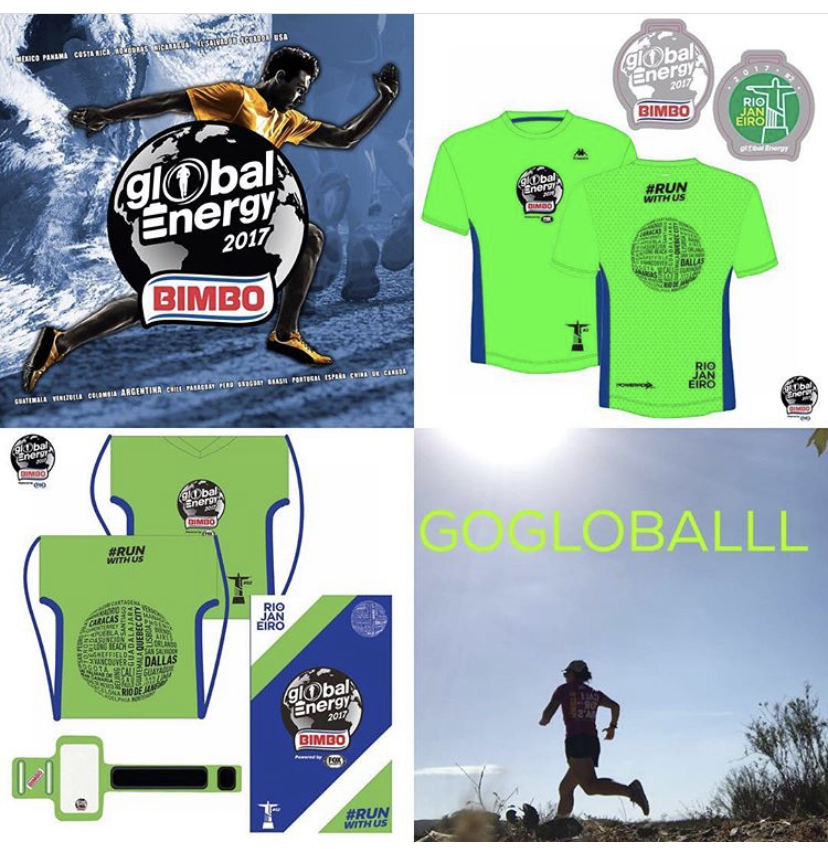
Global Energy Race - 5K or 10K

I’ve got some exciting news to share about this year’s Global Energy Race! I was selected to be an Ambassador, which means I get to help spread the word about this awesome running event—and hopefully convince you to join in 😉

What makes this race especially cool is that it’s truly global: it takes place in 28 countries and counting. When you sign up, you’re not just running a race—you’re part of an international fitness celebration.


I ran the 10K last year in Long Beach and loved it. The course is flat, right by the ocean, with great views of the marina—perfect if you’re chasing a PR or just want a beautiful run.


If you’re interested, sign up and use the code GOGLOBALLL (that’s three L’s at the end) to get $5 off either distance. And bonus: this race is known for having some pretty great swag and shirts, too.
Hope to see you out there!


Global Running Day

When I was a kid, riding around town as a passenger, I remember seeing runners and thinking: W H Y???

Do these people enjoy being out of breath? Sure, it’s good exercise, but… why?

Why would anyone willingly subject themselves to painful repetition? Were they trying to lose weight? But some of them already looked amazing. Could it actually be fun? And if so… how?

So many questions.

It wasn’t that I was inactive. I loved sports (especially swimming and tennis) so when high school PE rolled around, I was excited… until the coaches uttered those dreaded words:

“Warm up on the track.”

or

“Run a mile - you’ll be timed.”

That pebbly, crumbly, graham-cracker–colored track. The sight. The sound. Instant dread.

A few months into freshman-year PE, I started having knee issues. After multiple doctor visits, I landed in physical therapy. The highlight? A doctor’s note excusing me from PE. So there I was on the sidelines, eating vending-machine Twinkies three times a week while my classmates ran endless loops.

I was told running was bad for my knees - and I believed it. Whenever someone asked if I ran, or why I didn’t, that was my answer. Eventually it turned into a quiet conclusion: running just isn’t for me.

Looking back, that belief was a powerful teacher. We’re often limited less by reality than by what we accept as truth.

At the time, I didn’t fully understand what physical therapy was. I was one of the youngest people there, and it felt like a very specialized gym, where someone showed you exercises, and then praised you enthusiastically when you did them correctly.

At one point, as I moved from squats to the balance board, I remember thinking, Why am I even here?

Then, while I sat at the leg press, my PT said, “Good. Your quads are getting stronger.”

Fast-forward a few years to my senior year of high school. My family and I signed up for a local 5K - our first race ever. Three miles felt like a lot, but my mindset was simple: It’s for charity.

Being total newbies, we lined up near the front. The logic? Maybe it’ll be over sooner.

The horn blew. I was passed by about 99% of the field. I went out way too fast and earned myself a side stitch by the end of mile one.

And mile one was downhill.

That was 2001.

After that, I didn’t own a proper pair of running shoes, and I didn’t seriously attempt running again… until 2014.

By then, I’d been doing cardio dance classes and lifting light weights for a couple of years. One day, feeling peppy, I found myself standing on the edge of a familiar track. This time, though, there were no classmates. No competitors.

Just me. My shoes. And the loop.

I could go at any pace I wanted.

So I jogged. Slowly. I’m pretty sure a turtle could’ve passed me.

But I kept going. I didn’t push until I was breathless. I just moved, step by step.

Step by step.

And today, on Global Running Day, I think about that journey and how running eventually became something I enjoy. I might even be one of those runners you see outside now.

And if you ever catch yourself wondering… why?

I invite you to lace up and see what you might discover out there.

Whoos in El Moro 10K Trail Run

7 am view 

My race repot and reflections here on the 10K trail run - I’d rested the day before - on purpose. No running, no workouts, nothing. I like putting my legs in time-out so that on race day they feel fresh, fired up, and slightly annoyed enough to want to move.

Unfortunately, I also had a macchiato.

I did not fully appreciate what caffeine would do to me. I tossed and turned until about 3 a.m. Normally, playing a word game on my tablet knocks me right out, but not this time! I was wide awake. Alert. I even won a couple of games, which only made things worse. Somewhere in that haze, I RSVP’d to a few events and nearly bought something off my Amazon wish list. (Thankfully, it stayed in my cart.)

Two hours of sleep. One big hill. 6.2 miles.

This was going to be an adventure!!!

I always say I’m not going to race, that I’m just going to run “comfortably hard,” whatever that means. But inevitably, the competitive switch flips, and suddenly I’m thinking strategy more than effort.

Parking was easy. Bib pickup was smooth. The shirts were actually cool - one of the perks of Whoos. I scanned the crowd, wondering how many people had signed up for the 50K and 25K that had started an hour earlier. I felt immediate relief knowing I was not in that group today. Confidence for the 10K started to build.

There couldn’t have been more than 20 of us. Everyone looked legit. Fast. That’s when a new goal emerged:

Just don’t finish last.

Someone has to - but that someone was me last year in the 50K, and I had zero interest in a repeat performance.

As we lined up, you could hear watches beeping all around while race director Molly went over the course details. (Side note: Molly is a hardcore ultra runner - 50s, even 100-milers. Thinking about that made this 10K feel like a very reasonable slice of the pie.)

“Ready, set… GO!”

And we were off.

I’m usually good about pacing the first mile, because I’ve hit the wall before, and it’s one of the worst feelings. It’s like magnets suddenly attach your shoes to the ground.

So the plan was to enjoy the trails, take in the scenery, and mentally prepare for the hill waiting at mile two.


Shaped like "M" for monster hill 


Before the first mile was even done, several runners passed me. I might’ve been the caboose now, and that was okay. Hills change things.

And then—boom.

It felt like stepping onto an elevator that only went up… while breathing hard. Turbo walking became necessary. A woman in neon pink pants ahead of me jogged steadily the whole way. Somehow, I managed to trail her for the entire climb, alternating between short bursts of running and walking, maybe 10 to 15 steps at a time.

When the trail finally curved, I could hear the course guides cheering. The encouragement helped, but I was winded. My quads started to noodle out.

Too early for noodles.

And then it hit me: This was the race I’d been waiting for. One that challenged me both cardiovascularly and muscularly. Road races don’t usually push me there - you can’t go all out from the start. But this? This demanded something extra.

I walked a few steps at the top of the hill - painful, because the terrain flattened out - but I needed air. Then I jogged. And suddenly, a second wind kicked in. My feet felt light again.

That feeling? One of the best in racing.

I ran through the mile-three aid station. The trail flattened into a tiny roller coaster, maybe 20 feet up and down. After "Monster Hill," my body charged right through it. Best news of all: it was downhill from here.

Downhill running is its own art. I increased my turnover and focused on staying light. It was fun. My obliques kicked in, working to keep everything aligned as my legs pounded fast. I scanned for rocks, but still felt like a barrel rolling downhill.

I clocked my fastest race pace ever: 7:07 per mile.

And then - of course - I got passed. On a downhill. That doesn’t happen often. Her stride looked effortless, and she disappeared ahead. I had to laugh.

I stayed focused on form, but I was having way too much fun. Running fast without feeling out of breath? Magic. At the bottom, I checked my watch.

52 minutes.

One mile left.

Could I break an hour?

The final mile had a slight decline. I pushed. Hikers passed in the opposite direction. I was smiling, they smiled back. The vibe was warm and encouraging, and suddenly the finish line was right there.

I kicked it in, crossed the line, and stopped my watch.

1:01:01.

A new PR.

Shattering my old one of 1:27:36.


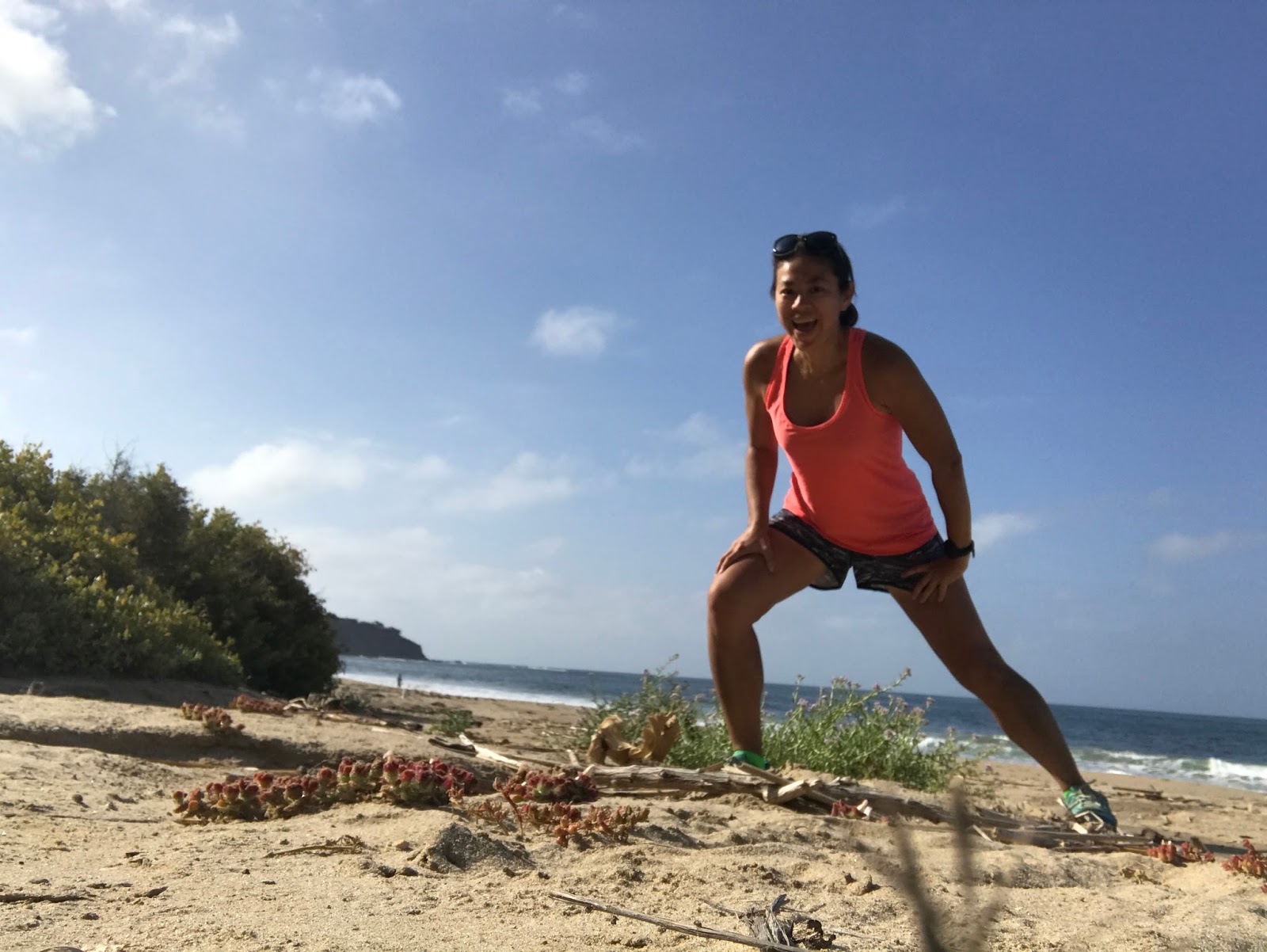
Time for some stretching and beach relaxation


Just Run


After a full day of meetings, work, and teaching, followed by eating and grocery shopping (the most important errand for runners, amirite?) I found myself at a fork (ha!) in the road:

To run… or not to run?

I was starving, so I decided it would be a rest day and that I’d run tomorrow. (Possibly the most overused excuse in the book.)

Instead, I sat down and read about running speed, convincing myself that a small part of me was still… running.

But let’s rewind for a moment - to when I first started running nearly three years ago. Back then, the only goal was finishing one mileKeep your goals reasonable, they say, and with running, that advice somehow feels both true and wildly misleading.

The first time my feet hit the track, I wasn’t stopping, but I was definitely turtling along. I wasn’t chasing time. When I completed that final loop, I was so surprised I’d finished that I nearly forgot to stop my watch.

Beep.

9:45.

Even more surprising? I felt like I could keep going.

Soon, one mile felt manageable, so I tried two. You can see where this is going.

Eventually, running became routine. Two miles - boom, done. Three or four if I had the time. I was also cross-training and dancing a lot back then. Unlike my high school PE days, I actually enjoyed running.

A few months later, a new question popped up: How fast could I run a mile?

Closely followed by another: How far could I go?

At its core, speed comes down to a simple equation: stride length + cadence. But increasing both at the same time is tricky (and a great way to get injured, from my experience). Overstriding is a common pitfall: reaching too far forward so your foot lands ahead of your center of mass, creating a chain reaction of foot, knee, and hip issues. Plus… it’s just inefficient.

I’m no expert, but from personal experience, cadence is my stronger suit (thank you, years of metronome-based musician training). My stride tends to be on the shorter side, even when sprinting, I might hit 1.2 to 1.3 meters. A cadence around 171–174 feels like a comfortable jog, but holding 180? That’s a whole different beast.

And then there’s the real brain teaser: what if you can hit 180 steps per minute… but you’re still running 8-, 9-, or 10-minute miles?

Food for thought. That’s where the art of training comes in.

Running seems as simple as putting one foot in front of the other.

Or is it?

Declared Rest Day

Okay, I hereby declare today a rest day. Not because it’s Saturday, but because I’m genuinely surprised by how sore I am. My quads, hamstrings, and even my calves have all joined in on a collective whining session.


Taking notes on the track 

And here’s the surprising part: it wasn’t caused by running alone. Nope. It was caused by - brace yourself - I’m saying the G word, which I’ve been avoiding like the plague - the gym.

Over the last six months (okay… maybe more), I got a little carried away with just running and quietly neglected strength training, drills, and cross-training. It’s easy to do when it’s just you, your running buddies, and a trusty pair of shoes. (I’ll never forget that agonizing 10-mile loop last spring - huge thanks to Rod for pacing me from mile three-ish onward after I foolishly tried to hang with Mike and lost him two miles in.)

So yesterday, I temporarily parted ways with my running shoes and reintroduced myself to my longtime gym. Some famous athlete-turned-personal-trainer (name escapes me) once said: Choose a gym close to you, because you’ll actually go. So true. Unfortunately, the gym I committed to is about 25–30 minutes away. My runner logic says: Why sit that long when you could squeeze in a 5K? And yes, my friends will confirm - I do not sit still well. 😆

That said, when I realized my mile pace had slowed to about 9:30 per mile, nearly a full minute off my half-marathon PR pacing, I was, to put it mildly, horrified. I also finally admitted something I’d been avoiding: I hadn’t touched a treadmill, leg press, heavy free weights, or even a group exercise class since August 2016. Eight months ago.

Back in September and October, I raced four weekends in a row - 10K, 5K, half marathon, and 10 miler - and felt great. I even set a PR in the 10 miler. Then the holidays arrived… and I settled in too. Hard.

Suddenly I was sitting. Mostly sitting. Catching up with people over long meals, because, let’s be honest, runners are always saying things like, “Sorry, 8 p.m. is too late, I have to wake up at 3 a.m. for a race.” It felt nice to sit. One dessert turned into another. 


This is still healthy, right? Because it is a rainbow of colours.

Through all of this, I still ran for fun. I didn’t race in December, but I made sure I got my outdoor time. I kept things together enough to run a couple of January 5Ks and squeak in under 30 minutes - barely. That’s the sneaky thing about fitness: it can slip away without you noticing… if you never test it.

My times crept up - 30 seconds, then 50, then 60. I blamed sleep, reduced mileage, and the occasional late-night large meals (we’ve all been there). After all, I was still running! Mini miles count!

But when I found myself feeling winded near the 30-minute mark in 5Ks, knowing my PR is 27:11 on a true 3.1-mile course, I thought, Huh. That’s weird.

So… back to the gym. Time to rebuild some strength. Time to show up again. See if they bought new equipment. Or moved anything. Since it was such a drive, I committed to staying one full hour - a massive commitment for someone who prefers running and calling it a day.

I decided on a circuit-style workout: drills, weights, and a little jogging (because I couldn’t help myself). About 20 minutes in, I wanted to quit. I was breathing louder than the music blasting through the speakers. But I stuck it out for the full hour, wondering how I used to do this weekly, in a group class, no less.

And now… today.

I am feeling it.

The foam roller is my best friend. So are turmeric, avocados, and all the anti-inflammatory foods. And honestly? This feels like the perfect day to sit, recover, and blog.

Rest day officially approved.

Carlsbad 5000: All Day 20K

An "all day 20K" sounds long. All day? It is a test of endurance, though packed into short bursts of four 5K races. The Carlsbad 5000 attracts many runners, because of it's relatively flat and fast course in downtown, you guessed it, Carlsbad, CA. Each 5K was divided into the following groups:

Masters and Men over 40
Masters and Women over 40
Ages 20-29
Ages 30-39

So guess what the all day 20Kers did? 

We committed to all four races.

As soon as I heard about the 20K, my hand gravitated towards the "REGISTER" button. This would be a cool challenge, and if I was going to make the trek to San Diego, I might as well run four races instead of one, right? 

Plus, another question I had for myself was, would this be more difficult or easier than a half marathon? I had to find out. My hunch was this would be easier, because I had at least 30 minutes break between each race. But, 5Ks tend to be fast, so perhaps I would burn through more sugary carbs, and use more fast twitch muscles, yet need to rely on the endurance muscles to...endure this four times? 

The first race started at 6:55 am, which meant wake up was 4 am. It was chilly out, dark, and my first thought was, "Well...at least some people wake up at this hour." My mom kindly agreed to come along and be my cheerleader, photographer, and elite runner sidekick oogler. I opted for VIP parking, which cut down on the stress and time weaving through the road-closed downtown area. Totally worth it. 

The infamous row of Port-o-Potties

Because the course crossed the railroad tracks, the start times had to be adjusted with the train schedule. So a tad after 7 am, we were off! The majority of the runners were men over 40, and I definitely got passed up by guys twice my age. Like I said, this race attracts the speedsters!


The front of the pack looking very...speedy

I knew I had 3 more races to run, so I tried to pace ultra conservatively and not get too carried away with the speed of the others. Closed out the first mile in 8:49. A bit on the fast side for my strategy. 
I ended up hanging in there and pushing it and finishing in 28:20.

Pretty stoked, a little red, and already onto water bottle #2
I was feeling pretty good, and ready to take on the race #2, which was supposed to start around 8:12 but got pushed back to 8:26. Again, train schedule. I had grabbed some fruit and snacks at the finish line but wasn't hungry. Instead, I popped an energy gummy that tasted like a watered-down, jello'ed version of the Starburst candy. Hopefully it'd deliver some sugars to my muscles fast.

Race #2 with the Women's division felt better! Either because I had "warmed up" or was just enjoying running in mostly feminine energy. I finished in 29:45. Now, I was starting to feel hungry.

Eating anything I could get my hands on


The ladies taking off - I am not pictured because I was not in the  5 minute per mile corral :)

For race #3, I was starting to feel a bit fatigued. Wasn't sure if it was more mental than physical. I had been in "race mode" since 7 am, and it was now 9 am. If I were running a half marathon, I'd be nearing the finish line at this time.

But - the all day 20K was only half over. Race #3 slated to start at 9:26 am. I spend the time waiting and digesting several crackers and a blood orange. 

Originally, my goal was to run all four races under 30 minutes. Seemed reasonable at first, but going after how I felt, I changed it to just run all of them nonstop. No walking. That's one thing endurance running has taught me. Be adaptable. 

I ran it in 31:37. 

Ok, more like ran-jogged. My legs were starting to feel like steel. Not in the power way, but the weight way. 

Yug.

So my finishing picture after race #3 is more of a starting energy for race #4. I got this!!!!!


By 10:30, the final race was off. Three and a half hours after the initial race. 

We ran the same course, so this time around it was like running in auto pilot. Oddly enough, it didn't seem long, as repetition can make things, at least mentally, seem much longer. In fact, it felt faster than the first race, even though I know I "snailed" out on this one. 

Non-stop running got me a finish time of 32:29 for the fourth and final leg.

I was glad to be done. Didn't have much more energy to do another 5K. 

However, it did make for some pretty data: 


I was ready to now be a spectator and watch some of the elite races that followed us. It was awe inspiring to see these runners clocking in 13, 14, 15 minute 5Ks. 

Stride length goals, among many others

Awesome!

I left the race physically tired, but mentally refreshed and inspired...hey that rhymed!

Was it easier than a half marathon? No way. I thought the waiting times between the races would be an advantage, but it feels like getting the miles done in one go is easier, provided you pace yourself well in the beginning.


Running For The Love of Running 5K

The name of the race says it all - running for the love of running.

Yes, I love running. There are some days where I don't like running. I feel like running away from running. Running to the kitchen to eat because I'm bored - but know I don't want to run.

But most of the time, I love running. If I wake up with a knee or hip tweak, I'm bummed. If I see it's raining out, I'm bummed. Worse of all, if I sleep in and realize that at 7:30 am it's already 75 degrees and sunny out, I'm bummed.

When the sun's out - time to be lazy


But this morning, rain or shine - I was ready to take on this 5K. This is my second race of 2017.

I don't race for medals, or the bragging rights, or because I have nothing better to do at 6 am on Saturdays or Sundays. The real race is against myself, seeing if I can better a PR, test out a new technique, a new nutrition plan. Being out there with other runners, finding out what their backgrounds and stories are, is what it's mostly about.

Different people exploring the same trail

I show up to Long Beach Marina Park - close to 7 am, to pick up my bib number. Parking's open and easy, as long as you don't choose the streets. There are runners doing their warm ups, high knees, sudden sprints. They look serious. Then you have runners who are clearly in it for the fun and social reasons, dressed up in costumes - but who knows, they could be speedily legit. Remember the guy who ran a half marathon in a full suit? A new record was set for that recently. To each his own.

What I like about the company who organizes these races, A Better World Running, is that they keep their races relatively small (under 400 people total for all the race lengths), they are about personal goal achievement, and they keep their entry fees lower than the average. That's because they do away with the t-shirts. I checked my closet and I have plenty of race tees I hardly ever wear. I recommend checking out their races, as they put on a several a month. You do get a finisher medal, and the usual race swag of samples. Plus I like how they allow you to pick up your bib on race morning, rather than the day before. Some of us live outside the area, so it saves us that extra trip.

Next to the Start/Finish line. Low key, diverse, and organized!  

A few minutes before race time, they announced the course, how it was marked, and what to expect. There were no corrals or pacers. Just a few simple words, and we were off.

Running along the beach on the cement path was refreshing! It had rained the night before, giving the air this crispness that my lungs desperately needed, not even 1 mile in. My pace wasn't outstanding, and certainly not my fastest - but I pushed on and tried to enjoy the run. I was glad to see the turn around mark, and knew I was half way there. Usually my tactic is to run each mile a few seconds faster, but by mile 2.5 I felt myself dialing back a bit. A quick snapshot of my holiday glutton and parties flashed in my mind, but now was certainly not the time to dwell on all the less-than-ideal foods consumed, and how much more couch contact time I'd had. I focused on my breathing exercise, and before I knew it, the finish line was in sight.

Goooo for it!! That's the thing about 5Ks, you have to go fast. Unlike half marathons, or even 10Ks, there's really no warm up mile, a pacing strategy of building up speed. Once you're off running in a 5K, you're running. Running as if the finish line were 100 m away.

An (unflattering) reminder of efforts during the final 100 yards

When I crossed the finish line, the lady with the stopwatch was saying, "Okay, 1, 2.....and 3." She handed me a medal, then some volunteers handed me another medal (the finishers one). What?? Looking closely, turns out I also received an overall 2nd place finish for womens. WOW. Was not expecting that. All 3 top women finishers finished within 10 seconds of one another. In fact, all of us were surprised, and we took turns snapping pictures for one another. For the lady who won first, this was her first 5K. Awesome!


And that's what I loved about this race -- it welcomed people of all ages and abilities, and promotes running for the sake of running. 

Continuing To Run: The Great Chocolate Race

Ok, I'll admit - the race title sounds enticing. The Great Chocolate Race? Epic and appetizing.

But that's not why I signed up.

I signed up because it was the perfect re-entry race post holiday season glutton where for once, your social schedule and took precedence over your running schedule. It's the times of saying, "My 5 mile run tomorrow can wait. Let's just go out and have ice cream anyway!"

But once December was coming to a close, you know that common resolution to still fit in your clothes - time to get back on track, literally.

With the run taking place the last weekend in January, there was enough time to prep for the mileage - in this case, I opted for the 5K and not the 10-Miler, though my computer mouse hovered over "sign up" for the 10-Miler a few times.

Plus, a few friends were joining me for the race and so the 5K it was.

The race started at 7:30 am, and I'm all for early start times. The cooler, the better. But it was a while since I'd done a run so early and near the water, so it was awfully chilly. I kept my brown - OK, chocolate colored jacket on to find the bib pick up station. Wasn't quite the simplest task and I clocked in about a 1 mile walk just roaming around. I didn't mind since it was a nice warm up.

Queued up at the start, not a tank top in sight!

Once we got running, I found it a beautiful course, weaving through the Long Beach Marina with the Queen Mary and then rounding about home near the shopping mall.

After the finish line, we all got to enjoy hot chocolate and received a small box of Godiva chocolates - no doubt one of the biggest draws to the race. 

Doing the iconic pose - not like the medals were chocolate coins or anything 


Global Energy 10K

Excited to have #RunAsOne with 37 cities around the globe this morning. What is even more exciting is that this race is a Guinness World Record attempt - the most number of cities participating in the same race on the same day.

37 cities, 22 countries, 1 race!

Bimbo Bakeries, the host, will donate two slices of bread to the Los Angeles Regional Food Bank for every 1 kilometer each runner completes. That translates to one loaf of bread per 10K.

The race started at the Marina Green Park, looped around the Shoreline Marina, then continued along the beach path. After making a U-turn at Belmont Pier, we ran back on the flattest and straightest part of the course towards the finish line.

The 10K course is USATF certified, meaning that the distance is legitimately measured, and more importantly, for a performance to be accepted as a record, or nationally ranked, it must be run on a USATF certified course.

It took me slightly under 1 hour to run -- and to complete my loaf of bread donation!

I thought the race tees were a great colour, so I wore it to a Greek Festival where I'm devouring feta fries like nothing else on Earth.

Keeping it global!


Magda Boulet WSER 100

All I want to say today is that, being a fan of Magda Boulet, her reflections on her first run at Western States 100 are inspiring and amazing. Check it out.


XTERRA Laguna Beach

When I first heard about XTERRA races, my eye immediately caught the word “triathlon.” Out of pure curiosity, I clicked - could this actually convince me to try one? With the race happening in Laguna Beach, surrounded by such a beautiful setting, it seemed like it could be the perfect first triathlon.

But XTERRA wasn’t just about triathlons - they also had a short and long course tri, plus 10K and 5K trail runs. Some friends of mine have been nudging me for years to try a tri someday. It’s really just a matter of time. But let’s be real: my schedule was already packed. Between my music career, long-distance running, gym cross-training, and the endless trips to the grocery store, not to mention washing mountains of fruits, veggies, and laundry, where would bike and swim training even fit in?

Honestly, there was still this pull to really dive into distance running. And to do that properly, I knew I needed to put in serious miles.

So, I’ll admit it: I was intrigued by ultra marathons.

My fascination with races longer than a marathon (anything 50K and up is considered a true ultra) actually goes back to February 2015. One early morning, half-awake, I was scrolling on my phone and saw a post from a local running group. A guy named Adam Kimble  was planning to run across the U.S., and the group was organizing a send-off run for the first few miles. The starting point? Huntington Beach Pier - literally in my backyard! But there I was at 6 a.m., just waking up, while he had already set off around 5 a.m.

I couldn’t help but feel a mix of excitement and nostalgia, imagining what it must have been like to see him off. And get this - Adam was attempting to break the world record for the transcontinental run. At the time, the record was 46 days, 8 hours, 36 minutes, set by Frank Giannino in 1980. (Update: a new record has since been set by Pete Kostelnick — 42 days, 6 hours, 30 minutes!)

I was inspired just reading about it. Naturally, I had to dig deeper. Who was Adam Kimble, and why would anyone want to run 3,000+ miles? I discovered he’s a seasoned ultra runner, with a resume of 100-milers, 100Ks, even the Gobi Challenge. And that led me down a rabbit hole - names like Dean Karnazes popped up, someone I’d first heard about as a teen, utterly amazed by his feats. Meanwhile, I was huffing and puffing to finish a single mile, always over 10 minutes. Running was not my sport growing up.

And yet, here I was, excited at the thought of stepping into the world of ultra running.

By Christmas 2015, after letting the idea marinate for months, I started scouting race calendars online, treating them like I would my planner for the new year. I wasn’t just picking races to check a box - they were my motivation to gradually build mileage. There’s no magic in waking up one morning and deciding, “Alright, today I’ll run 10 miles!” if your longest run so far has been just a mile. Ultra running requires patience, discipline, and yes, a lot of tenacity. Instant gratification? Not in this sport.

What I noticed in my research was that most ultra marathons take place in hilly terrain, mountains, or trails. Makes sense - you can’t exactly close hundreds of miles of roads for a race. And there it was: the realization that I hadn’t done much trail running. That’s when the XTERRA Laguna 10K caught my eye.

Fast forward to a foggy June morning, and I found myself at Crystal Cove State Park. The air smelled like excitement, and a little neoprene from the triathletes’ wetsuits. People buzzed around, getting their numbers tattooed on, setting up bikes, checking gear, all the usual pre-race chaos. And yet, I loved the simplicity of just being a runner: decent trail shoes, a hat, a bib number, and you’re set. The 10K crowd was small, which made for a nice, relaxed start.

And the views? Absolutely stunning. The weather stayed cool and overcast, perfect for a morning on the trails.

What's better than a fog machine at night? Real fog in the morning

Not another hill! Oh yeah. This is a trail race. These races are known for being hilly. 

It's hard to tell the level of steepness here but your legs will let you know


National Running Day

In honor of National Running Day, I couldn’t resist getting outside for a little jog. If you’re a runner, you know how it feels - miss even one day, and it drives you a little crazy.

Since completing my first ultra marathon last month, I’ve been nursing some knee and IT band issues, so today was a big win for me. I managed to get in a full mile without pain, and honestly, it felt amazing.

As I ran, I couldn’t help but drift back to past races, and one that always sticks with me is the Long Beach Half from 2015. I still remember the energy I felt around the halfway mark, every stride feeling electric, like I could fly forever.

Just passed the 10K in my memory replay… and, well, another 11K or so to go!

No matter how you celebrated National Running Day, I hope it was full of joy, movement, and maybe a little nostalgia too.

Me feeling great and happy at the 10K mark. Thanks Lukas for the photo!